

Monkey is a random video chat app that pairs you with strangers on camera for short, fast rounds. Each match starts with a 15-second timer: the call continues only if both people choose to keep talking. Is it safe? The honest answer: the app states an 18+ rule, but reviews consistently note that age verification is thin, and the video-first format carries risks that moderation cannot fully remove. Here is what Monkey is, how it works, and what to know before you turn your camera on.
What is the Monkey app?
Monkey is a live video chat app built around one idea: pair two strangers, give them a short window to talk, and let them decide together whether the conversation continues. There are no profiles to browse and no friend requests to send. You open the app, get matched, and start talking.
The app launched in 2016 and was originally created by a group of teenagers, which is worth knowing because it explains the format: fast, casual, low-commitment. Monkey found a second wave of attention after Omegle, the site that popularized random stranger video chat, shut down in November 2023. If you want the full story of that closure, read what happened to Omegle and the best alternatives.
According to Monkey's own site, the app claims more than 30 million users worldwide. Treat that number as a marketing claim rather than a verified fact, but the direction is real: the app is one of the better-known names in random video chat right now.
How Monkey works: the 15-second timer
The mechanic that defines Monkey is the timer. When the algorithm pairs you with someone, the video call starts and automatically ends after 15 seconds unless both of you actively extend it. No browsing, no reading profiles first: the matching is instant, and the decision happens face to face, in real time.
The short-burst format is deliberate. A bad match costs you fifteen seconds instead of an awkward long call, so people cycle through many strangers in a single session. Monkey offers two modes built on this core:
-
Solo mode: the standard one-on-one matching, you and one stranger.
-
Duo mode: you bring a friend into the session, so two of you on one side chat with whoever the algorithm matches on the other end.
Availability is worth checking before you install: the app works on Android and through a web browser, but according to 2026 reviews it is not currently available in the Apple App Store, which is a useful reminder that app-store availability changes and should be verified the day you sign up.
Is Monkey safe?
Here is the honest part. Monkey's terms state that users must be at least 18. The problem, as security reviewers keep pointing out, is that the app has no robust way to verify it, and the app's history is rooted in a young audience. That combination means two things in practice: you cannot be sure the stranger on the other side is an adult, and parents should treat the app as an adults-only space rather than a kids' tool.
On top of that, the general risks of video roulette apply:
-
Anything you show can be recorded. The other side can capture the stream, so treat every round as public.
-
Content is unpredictable. In a random video format you will eventually see someone rude, trolling or worse. Moderation and reporting exist, but they work after the fact.
-
Anonymity cuts both ways. No profiles means no accountability for the person on the other side either.
The standard habits help a lot: never share your real name, address, workplace or social handles; keep identifying details out of your background; skip without guilt the moment a round feels wrong. For a fuller checklist, our guide on whether anonymous chat is safe covers the format in general, and most of it applies to video double.
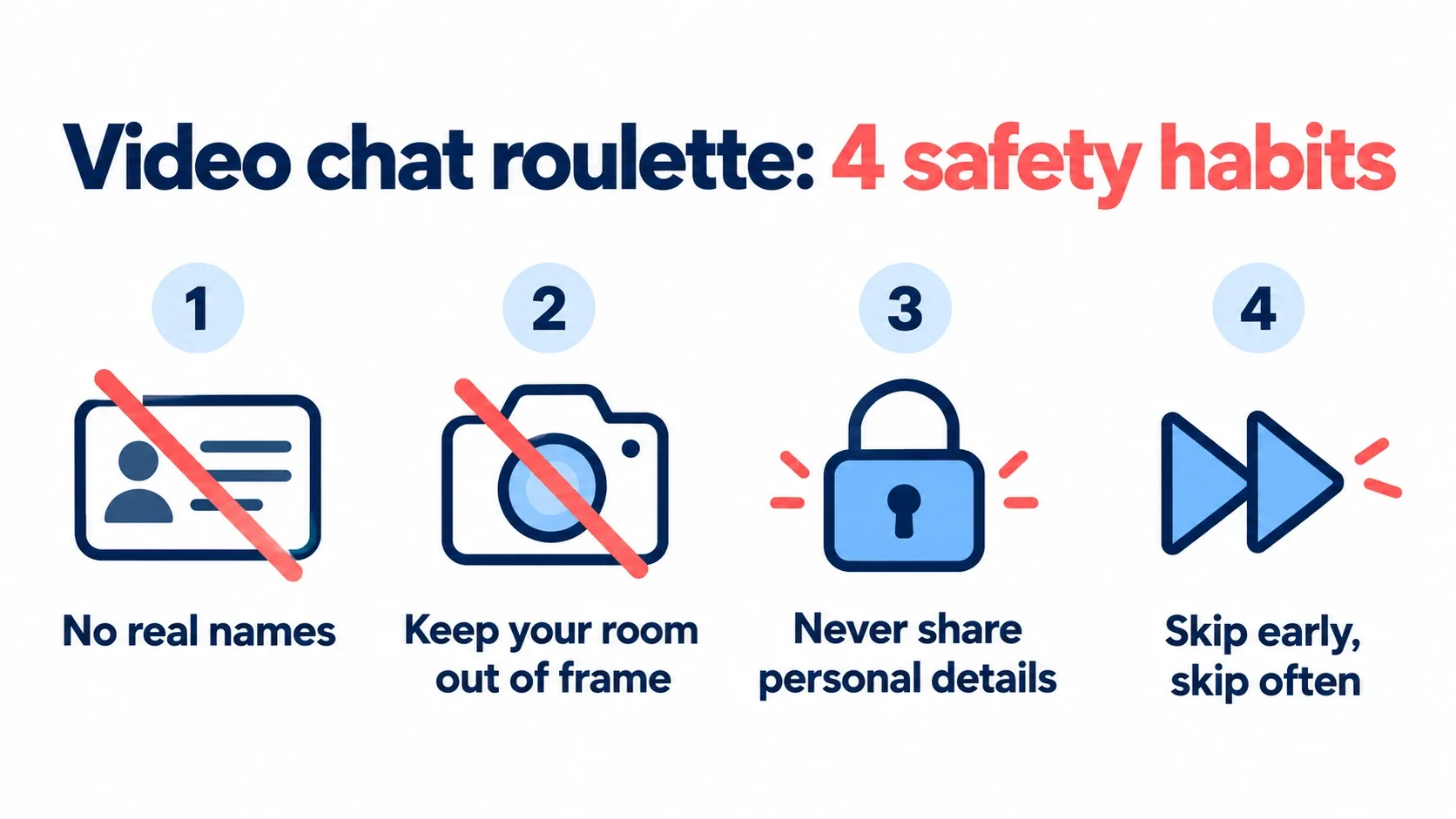
None of this means Monkey is unusable. It means the safety question has the same honest answer as everywhere in this category: the format is as safe as your habits, and video plus a thin age check raises the stakes compared to text.
Who Monkey works for (and who should look elsewhere)
If you enjoy fast, face-to-face roulette and you follow the safety habits above, Monkey delivers exactly that: short rounds, quick decisions, zero commitment.
But a lot of people discover they love the idea of talking to strangers and dislike the camera part. If that is you, the format you want exists: random chat with text and voice, no video at all. Chatus works that way: instant matching with a stranger, typing or voice, no camera pointed at your face, no registration, everything inside Telegram. We broke down the no-video approach in our piece on a free Omegle alternative without video, and the short version is: you keep the randomness and lose the exposure.
FAQ
Is Monkey free?
The core matching is free, and the app offers paid features. Pricing and terms change, so check them inside the app before paying anything.
Why does Monkey use a 15-second timer?
To keep the commitment low. If a match is bad, it costs you fifteen seconds; if it is good, both of you extend it. The timer is the app's whole personality.
Is there an age limit?
Yes, the terms require users to be at least 18. But since age verification is limited, treat the space as strictly for adults and act accordingly.
Did Monkey replace Omegle?
Not exactly. Omegle closed in November 2023, and Monkey is one of the apps people moved to afterward. It is a separate service with a similar video-first format.
Random chat without the camera roll
Talking to strangers is still one of the most refreshingly spontaneous things you can do online, and you do not need a camera or an app install to do it. Open Chatus, get matched with a stranger and talk, by text or by voice, without showing your face or signing up.


